
Latest Articles
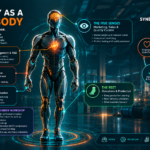
- Managing a Company Through the Philosophy of the Human Body: Synergy and Organic Functions in the Custom Rubber Workshop Industry
- Product Certification or Quality Evidence with Client and Third-Party Witness Testing: Which Takes Precedence for a Custom Rubber Spare Part Workshop?
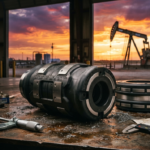
- National Rubber Resilience and Material Innovation: The Heart of Modern Custom Rubber Component Reliability

- Happy Independence Day, Republic of Indonesia!
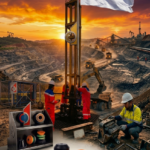
- Quality Gap Control: Precision Strategies and Risk Management in Customized Rubber Spare Part Manufacturing
Introduction: A New Dawn for the National Rubber Industry
As we enter 2026, the face of Indonesia’s rubber industry has completely transformed. While Indonesia was once known merely as a giant provider of raw materials (Latex and SIR), the dominant narrative today is Equitable Downstreaming. At the heart of this movement are millions of Micro, Small, and Medium Enterprises (MSMEs) and smallholder farmers who manage over 85% of the nation’s rubber plantations.
The year 2026 represents a turning point due to the convergence of three major factors:
- The full implementation of global environmental regulations.
- The acceleration of supply chain digitalization.
- A shift in market demand toward a circular economy.
For Indonesian rubber MSMEs, this year is not just about surviving price fluctuations; it is about positioning themselves within a global value chain that increasingly demands transparency and sustainability.
Part I: Golden Opportunities Amidst Market Shifts
1. MSME-Scale Downstreaming: From Farm to Finished Components
One of the greatest opportunities in 2026 is the accessibility of more efficient, small-scale rubber processing technology. MSMEs are no longer forced to sell raw rubber (Bokar) at low prices to middlemen.
- Automotive and Electric Vehicle (EV) Components: The growth of the EV industry in Indonesia has created a massive demand for specific rubber parts, such as bushings, seals, and mountings.
- Medical and Household Products: There is a surge in demand for non-medical rubber gloves and rubber-based household appliances—which are more eco-friendly than plastic.
2. Natural Rubber as a Symbol of “Green Luxury”
In 2026, natural rubber is no longer viewed as a cheap commodity. In European and North American markets, certified natural rubber is now considered a “luxury” material due to its renewable nature compared to petroleum-based synthetic rubber.
- Eco-Fashion: Global footwear brands are collaborating with Indonesian farmer cooperatives to create shoe soles that are traceable down to the specific GPS coordinates of the trees.
3. Rubberized Asphalt and Green Infrastructure
The central government’s policy mandating the use of rubber-bitumen mixes for provincial and district roads has been a breath of fresh air. Processing MSMEs at the regional level can now become primary suppliers of rubber-asphalt masterbatches, significantly increasing local rubber absorption.
Part II: Challenges Redefining Competence
However, these opportunities come with a set of “cutthroat” challenges if not met with technical readiness:
- Regulatory Barriers (EUDR and ESG): The European Union Deforestation Regulation (EUDR) enforces strict requirements. Every gram of rubber entering Europe must have digital data proving the land was not deforested after 2020.
- Labor Crisis and Lack of Regeneration: The average age of Indonesian rubber farmers is now over 50. Without mechanization, national production is at risk of a sharp decline.
- Climate Change and Crop Diseases: The Pestalotiopsis fungus (leaf fall disease) remains a menace, causing productivity drops of up to 30% in parts of Sumatra and Kalimantan.
Part III: Adaptation Strategies for Rubber MSMEs in 2026
To turn challenges into competitive advantages, Indonesian rubber MSMEs must adopt three strategic pillars:
- Supply Chain Digitalization: Cooperatives must adopt simple blockchain platforms to record transactions and land locations to gain bargaining power with international buyers.
- Strategic Alliances with Agrotech Startups: Partnering with tech providers for sensors to monitor tree health and latex quality in real-time.
- Downstream Product Diversification: Successful MSMEs are those that adopt Zero Waste Production, such as converting old rubberwood into export-grade furniture.
Part IV: The Role of Government and Stakeholders
In 2026, the government is expected to provide:
- Laboratory Infrastructure: International-standard quality testing at the district level.
- Trade Diplomacy: Fighting for the recognition of local certifications (such as ISPO for rubber) to be on par with global benchmarks.
- Green Financing Schemes: Low-interest credit for MSMEs implementing eco-friendly practices.
Conclusion: A Future in Skilled Hands
The Indonesian rubber industry in 2026 is no longer about who owns the most land, but who possesses the most accurate data and sharpest innovations. MSMEs hold the advantage of agility. With the right support, they are the backbone bringing Indonesian rubber back to the global stage—greener, smarter, and more prosperous.