
Latest Articles
- Managing a Company Through the Philosophy of the Human Body: Synergy and Organic Functions in the Custom Rubber Workshop Industry

- Product Certification or Quality Evidence with Client and Third-Party Witness Testing: Which Takes Precedence for a Custom Rubber Spare Part Workshop?
- National Rubber Resilience and Material Innovation: The Heart of Modern Custom Rubber Component Reliability

- Happy Independence Day, Republic of Indonesia!
- Quality Gap Control: Precision Strategies and Risk Management in Customized Rubber Spare Part Manufacturing
A Solution To a Profit Margins For Downstream Domestic Rubber Industry In Indonesia For Small and Medium Enterprises Scale
There are 2 types of rubber, namely synthetic rubber derived from petroleum and natural rubber derived from latex. Natural rubber or elastonemeric polymer of isoprene (2-methyl-1,3-butadiene) in general (99.5%) is the sap of the Hevea brasiliensis plant from Brazil, which is extracted by tapping. This plant grows well and can be harvested at the age of 4, 5 or 7 years if it grows at an altitude of 0 – 400 meters above sea level in the tropics (located on the equator) such as in Southeast Asia, Africa, South and Central America. Actually both types of rubber are needed in various industries. but because there is an imbalance of supply and demand, so a management effort is needed as a solution to increase profit margins in order to stay in business.
With an area of rubber plantations covering 3.6 million hectares, Indonesia is the country with the largest rubber plantation area in the world. However, with rubber trees that are old and relatively low investment ability, this causes the annual productivity of Indonesian rubber land to only 1080 kg / ha, this positions Indonesia’s natural rubber productivity lower than Thailand (1800 kg / ha), Malaysia ( 1510 kg / ha ) and Vietnam ( 1720 kg / ha ) .
Based on BPS data, in 2017 80% of Indonesia’s rubber products are export products with destinations, such as: United States,w Japan, China, South Korea, Brazil, Canada, Germany, France, Spain, Brazil etc. And only about 20% of Indonesia’s rubber production is absorbed by domestic downstream industry players for the needs of the tire, footwear and glove industries.
Between 2002 and 2011 there was an increase in international rubber prices from 40 cents dollars per kg to 540 cents dollars per kg. This was triggered by increasing demand for rubber, especially from China. However, since 2011 until now, rubber prices have continued to experience pressure, due to weakening global economic conditions, highly competitive synthetic rubber prices and reduced demand by China.

At the international level, steps have been taken by world natural rubber producers in 2019, such as: Thailand, Malaysia and Indonesia which are members of the International Tripartite Rubber Council by reducing the volume of their natural rubber exports to the international market. At the national level, the Indonesian government implements and implements AETS and DPS. AETS is the Agreed Export Tonnage Scheme in which the number of natural rubber commodities that can be exported is stated, while DPS is the Demand Promotion Scheme, which is a policy to increase the absorption of national natural rubber by domestic downstream actors.
As with businesses in general, small and medium businesses really need to do segmentation, targeting and positioning on the product or brand that will be created and developed as a solution to increase profit margins . This is mandatory so that SME actors focus on their products and business.
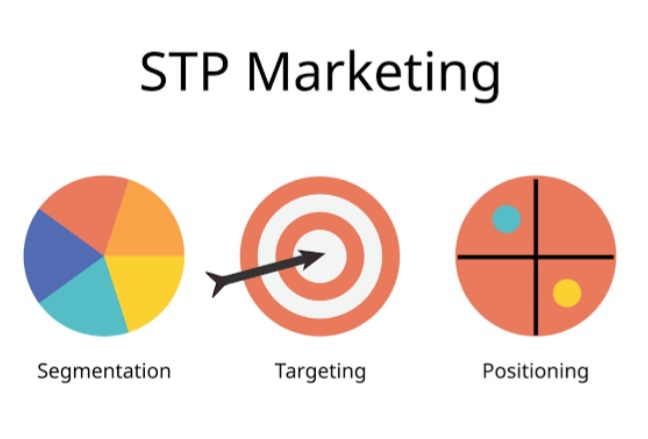
In simple practice, segmentation can be done by categorizing products (in this case rubber derivative products) based on industry (eg oil and gas industry, automotive, mining or manufacturing) and type of product requirements (eg mass product or made to order product) . After the segmentation stage has been successfully formulated or defined, the next step is to formulatel targets for rubber products or rubber derivatives to be developed (eg making mass products for the automotive-motor industry). The formulation of this target must take into account financial / financial capabilities, expertise, production capacity to potential sales within a certain period of time. The final step is positioning, namely positioning our business or product (in this case rubber products) in the eyes of customers and competitors. Through this positioning it can be easily determined how we promote our business and how different our products are compared to competitors’ products. An extreme example: if we have positioned ourselves as a local custom rubber product specialist in the automotive industry, of course we will not promote our business in the fashion market place and when compared to similar rubber products in the oil and gas industry, our local custom rubber products have high delivery rates. which is faster and not subject to import taxes.
By doing STP as one solution to increase profit margins as previously explained, niche markets can be easily defined. Niche market or market niche is a market potential that is still possible to be targeted, this market niche usually has certain characteristics and is limited. Example: a market with prospective customers who have a hobby of sports boomerang in Bandung.
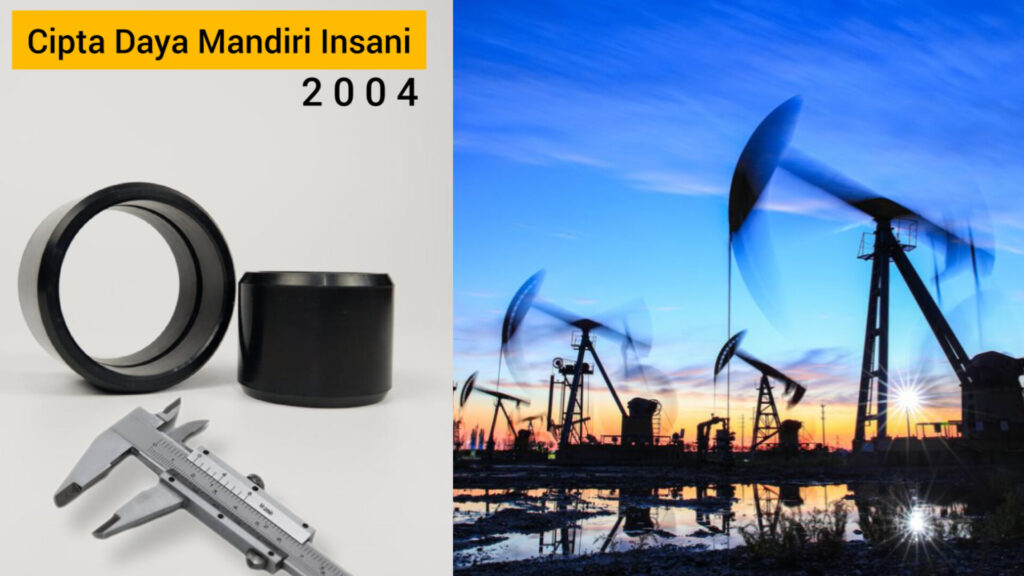
In 2004, the automotive industry began to move the wheels of the world economy. This has caused downstream rubber industry players in Indonesia to make the automotive industry a target market for their business. However, CDM or Cipta Daya Mandiri Insani targets a different market, namely the Oil and Gas Industrial market. This is because with too many players in one particular industry (eg automotive only) then it is certain that there will be an unhealthy price war. CDM is confident that with their engineering capabilities, CDM will be able to produce products that are acceptable to the oil and gas industry in Indonesia. In addition, the CDM also saw that the massive demand for world rubber by China in those years would increase the price of world rubber and its derivative products. It is no exception that rubber spare parts for the oil and gas industry, most of which are still imported, will also increase. To maintain the availability of rubber spare parts in oil and gas at competitive prices and quality as import substitution products, CDM is here with their superior products.