
Latest Articles
- Managing a Company Through the Philosophy of the Human Body: Synergy and Organic Functions in the Custom Rubber Workshop Industry
- Product Certification or Quality Evidence with Client and Third-Party Witness Testing: Which Takes Precedence for a Custom Rubber Spare Part Workshop?

- National Rubber Resilience and Material Innovation: The Heart of Modern Custom Rubber Component Reliability

- Happy Independence Day, Republic of Indonesia!
- Quality Gap Control: Precision Strategies and Risk Management in Customized Rubber Spare Part Manufacturing
Internship Program at CDM Rubber Workshop: A Strategic Investment in Human Resource Development
CDM Rubber Workshop, officially known as PT Cipta Daya Mandiri Insani (CDMI), is one of Indonesia’s leading manufacturers of custom rubber products. Established in 2004 and based in Bandung, West Java, CDM has grown into a trusted partner for various strategic national industries. The company produces high-quality rubber spare parts used in sectors such as oil & gas, mining (particularly nickel), heavy manufacturing, automotive, and other supporting industries. Flagship products like cone packing, rubber rollers, gaskets, swab cups, and various custom components are designed to international standards to meet stringent operational requirements.
Amid increasingly competitive industrial competition, CDM not only focuses on production and product innovation but also on human resource (HR) development. One manifestation of this commitment is the consistently implemented annual internship program. This program is not merely a fulfillment of corporate social obligations but a long-term talent management strategy integrated with CDM’s vision to build a young generation that is work-ready and contributes to national industrial progress.
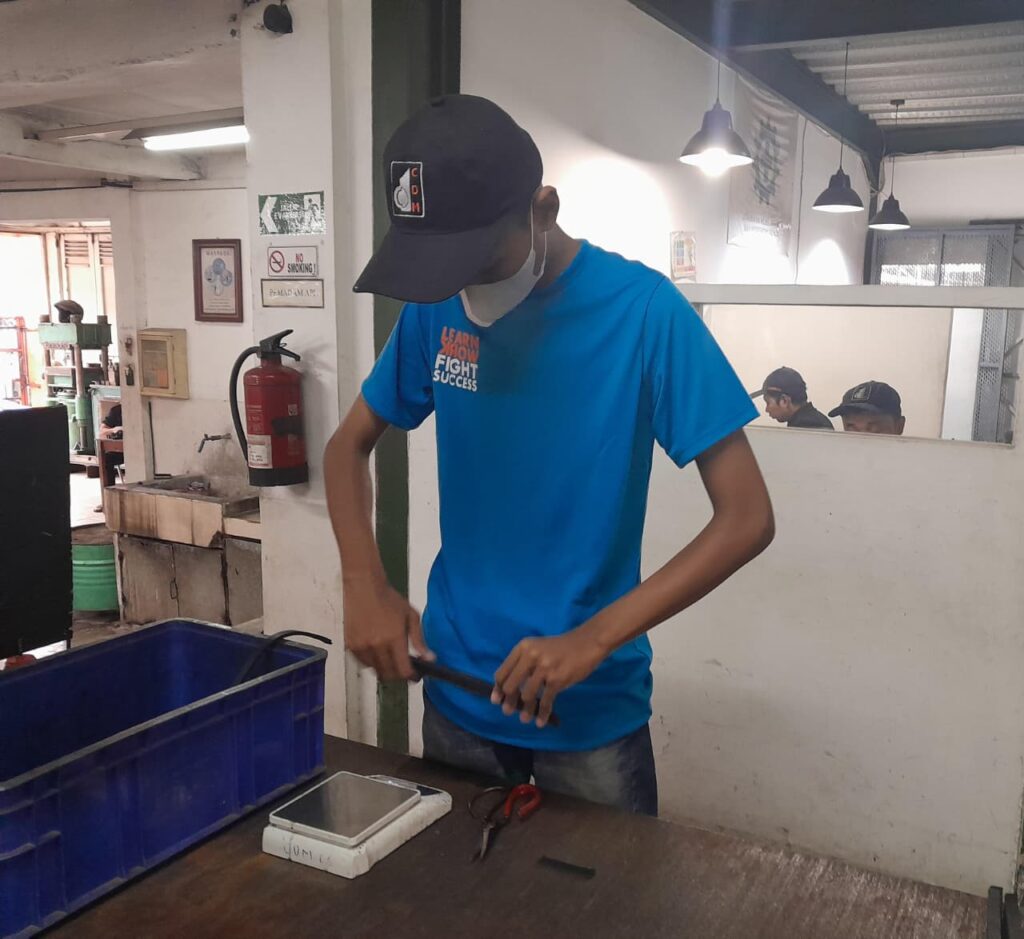
The internship program at CDM is designed as an effective bridge between formal education and professional industry realities. The duration of internships at CDM ranges from 6 months to 1 year, adjusted based on program needs and agreements with educational institutions or participants. Internship participants—often referred to as “interns” or “magang kids”—are not mere passive observers but are directly involved in hands-on field activities. From compounding and mixing rubber materials, molding using various techniques (compression, transfer, injection), vulcanization, finishing, to quality control and product testing—all under the guidance of experienced mentors. This “learning by doing” approach is a hallmark of CDM that distinguishes it from many other internship programs in similar industries.
Objectives of the Internship Program at CDM
The CDM internship program has clear and measurable objectives, aligned with HR development needs in the Industry 4.0 era:
- Building a professional mindset and work attitude
At CDM, interns are equipped with the company’s core values such as time discipline, responsibility for tasks, teamwork in production teams, and resilience when facing technical challenges in the field. A tough work mentality is formed through daily routines that demand precision and consistency—for example, ensuring no defects in products used on oil drilling rigs or mining conveyors. - Preparing for entry-level work
Internships at CDM serve as a simulation of a real work environment. Interns learn to comply with safety standards (use of PPE, lockout-tagout procedures, 5R housekeeping), follow production SOPs, and interact with organizational hierarchies—from operators to production managers. This experience is invaluable for fresh graduates who often experience culture shock when starting work. - Enhancing knowledge and skill development
Participants gain in-depth exposure to modern rubber industry technology and processes. They learn to differentiate types of rubber materials (natural rubber, synthetics like NBR, EPDM, Viton), understand compounding formulas, operate molding machines and extruders, and perform tests for hardness, tensile strength, elongation, and abrasion resistance. This knowledge complements academic curricula with directly applicable practical skills in the industry. - Fostering a spirit of innovation and continuous improvement
CDM encourages interns to provide improvement inputs, both in production processes and material efficiency. Some intern ideas have even been successfully implemented, such as jig modifications or waste reduction in the finishing stage.
Benefits for Internship Participants
The CDM internship program provides significant added value for participants’ careers:
- Increased employability
Real industry experience at CDM strengthens curricula vitae (CVs). Internship certificates, mentor recommendations, and project portfolios become strong assets when applying for jobs. Many CDM internship alumni are directly accepted at other large manufacturing companies. - Confidence building and skill mastery
Through direct practice, interns experience a tangible increase in confidence. Initially, they might be nervous operating a 200-ton molding machine, but after a few weeks, they can handle independent production under supervision. - Professional networking
During the internship, interns interact with engineers, quality assurance teams, production planners, and even directors. This network often becomes a gateway to future careers. - Potential conversion to permanent employment
CDM has a strong track record of recruiting high-performing interns as permanent employees. The performance appraisal process during the internship serves as an objective basis for internal recruitment. Additionally, many alumni who have completed internships at CDM return to apply for jobs at CDM and successfully become permanent employees. This makes the selection process easier for the company, as candidates have already proven their direct experience, understanding of work culture, and observed performance during the internship period. - In-depth understanding of the national downstream rubber industry
Amid the government’s downstreaming program for natural resources, interns understand how the rubber industry contributes to economic value addition. They are also exposed to global trends such as the use of sustainable materials and eco-friendly compounds.
Benefits for CDM Rubber Workshop
The internship program provides a clear return on investment for the company:
- Fresh perspectives and innovation
The younger generation often brings new ideas from recent studies, such as digitalization in quality control or material simulation software. These ideas help CDM in continuous improvement. - Support for operational productivity
Interns assist with routine tasks like mold preparation, product finishing, or production documentation. This allows permanent employees to focus on complex projects or high production targets. - Internal talent cultivation and succession planning
Internships are part of CDM’s talent pipeline. The company can observe potential future employees early on, reducing external recruitment costs and training time for new employees. The presence of internship alumni who return to apply and are accepted as permanent employees further strengthens this strategy, as the selection process is more efficient and low-risk. - Strengthening employer branding
Positive testimonials from internship alumni spread across campuses and social media, enhancing CDM’s image as a company that cares about developing young talent. This makes it easier for CDM to attract top candidates in the future.
Contributions to HR Development and Local Community Empowerment
The CDM internship program extends beyond individual or company benefits alone. It is a strategic Corporate Social Responsibility (CSR) initiative in human capital development, with broad impacts on the surrounding community.
Bandung and West Java are known as regions with many technical and vocational education institutions. CDM actively collaborates with various universities, higher education institutions, vocational schools/SMKs specializing in mechanical and chemical engineering, and local youth communities. Each year, dozens of internship participants come from these backgrounds—including children from families of small-scale industry workers near the factory location.
Concrete contributions provided by CDM include:
- Upskilling local workforce
Many internship participants come from surrounding communities without prior industry experience. After the internship, they return to their communities with new skills that enhance competitiveness in the regional job market. - Knowledge transfer to MSMEs
Some internship alumni start or work in small-scale rubber workshops. Knowledge of compounding, simple molding, and quality control gained at CDM supports the growth of MSMEs in the downstream rubber sector—such as producing seals, gaskets, or rubber mats for local markets. - Regional economic empowerment
With increased local HR competencies, a multiplier effect occurs: more skilled workers, higher productivity in small industries, increased community income, and faster-turning regional economic wheels. - Promotion of sustainable practices
CDM educates interns on environmentally friendly materials, production waste management, and energy efficiency. This knowledge is taken home by participants, spreading sustainability awareness in their communities. - Inclusivity and equal opportunities
The CDM internship program is open to diverse backgrounds—women, people with mild disabilities, and children from underprivileged families—as long as they meet basic qualifications. This aligns with the principles of diversity, equity, and inclusion (DEI) that are increasingly important in modern HR.
In other words, internships at CDM are a strategic investment in national HR development. They support the government’s vision to create skilled workers capable of competing globally, while strengthening regional economic foundations through community empowerment.
Conclusion
The internship program at CDM Rubber Workshop is a real example of integration between individual development, organizational needs, and corporate social responsibility in the context of human resource development. Through a hands-on approach and structured guidance, this program successfully bridges the gap between academic competencies and practical industry demands, particularly in the rubber manufacturing sector.
Empirically, this program contributes significantly to improving participant employability, internal company innovation, and enriching local workforce capacity in the Bandung and West Java regions. In the long term, initiatives like this support the achievement of the United Nations’ Sustainable Development Goals (SDGs), especially SDG 4 (Quality Education: ensuring inclusive, equitable, and quality education as well as lifelong learning opportunities) and SDG 8 (Decent Work and Economic Growth: promoting inclusive economic growth, productive employment opportunities, and decent work for all).
Further studies can be conducted to measure the quantitative impact of this program, for example through tracer studies of internship alumni or analysis of contributions to local MSME productivity. However, from an HR development perspective, the CDM internship program demonstrates that collaboration between industry and educational institutions is an effective strategy for building a sustainable and inclusive talent pipeline for the future of the national industry.