
Latest Articles
- Managing a Company Through the Philosophy of the Human Body: Synergy and Organic Functions in the Custom Rubber Workshop Industry

- Product Certification or Quality Evidence with Client and Third-Party Witness Testing: Which Takes Precedence for a Custom Rubber Spare Part Workshop?

- National Rubber Resilience and Material Innovation: The Heart of Modern Custom Rubber Component Reliability

- Happy Independence Day, Republic of Indonesia!
- Quality Gap Control: Precision Strategies and Risk Management in Customized Rubber Spare Part Manufacturing
National Rubber Resilience and Material Innovation: The Heart of Modern Custom Rubber Component Reliability
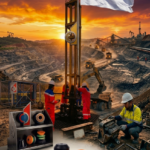
The global and national heavy industry sectors currently operate under technical parameters that are far more demanding, aggressive, and complex than a decade ago. The high demands for operational efficiency, massive production capacity increases, and tightening occupational safety standards have drastically transformed the landscape of mechanical engineering. From the depths of poorly ventilated underground mines filled with abrasive material friction, offshore oil and gas refineries with extraordinary hydrostatic pressure, to modern port infrastructures with colossal loading capacities, even the slightest failure can no longer be tolerated. Amidst this harsh ecosystem, sealing components (seals), shock absorbers (dampers), and flexible joints are no longer merely secondary mechanical accessories, but rather the primary frontline defense determining operational continuity. When a microscopic O-ring fails on an underwater drilling valve, or when a dock fender loses its elasticity amid pounding high waves, the impact is not just a fleeting financial loss of fantastic value, but a potential environmental catastrophe and a threat to human life.

This operational reality redefines the quality standards of modern rubber manufacturers. Mass production approaches based on generic formulas have now proven obsolete and dangerous for high-risk industrial sectors. The industry requires a major leap toward the development of custom rubber products with extreme resilience specifications. National rubber resilience is no longer measured solely by the tonnage capacity of raw materials it can process, but rather by the depth of mastery in material formulation technology, precision mold engineering, and the adaptability to the dynamic needs of cutting-edge heavy industries.
The Complexity of Operational Challenges in Extreme Environments
Modern custom rubber parts are tested beyond the historical physical limits of conventional materials in manufacturing history.
1. Upstream Oil and Gas Sector
In the upstream oil and gas sector, critical components such as packers, V-packings, high-pressure O-rings, and cone packings must be able to survive under a combination of lethal physical stresses:
- Massive hydrostatic pressure thousands of feet below the Earth’s surface.
- Exposure to aggressive corrosive fluids such as hydrogen sulfide and sour crude oil.
- Extreme operational temperatures soaring due to friction and geothermal heat.
Ordinary rubber will experience structural degradation within hours under such work cycles; it will soften, lose its elastic memory, swell, or even shatter into pieces.
2. Marine Engineering and Maritime Infrastructure
Turning to marine engineering and maritime infrastructure, the physical challenges take a different yet equally lethal form:
- Products such as giant rubber fenders at container ports, bridge bearing pads, and fluid transfer hoses must be ready to face constant waves and tidal currents.
- High mechanical abrasion caused by the friction of ship hulls carrying hundreds of thousands of tons.
- Long-term chemical degradation due to direct exposure to solar ultraviolet (UV) radiation and high atmospheric ozone concentrations. UV rays have the destructive capacity to break rubber surface polymer chains, causing micro-cracks (ozone cracking) that seep into the inner structure of the component.
The fundamental limitations of conventional rubber in facing this multi-dimensional combination of destructive factors force material engineers and industrial designers to completely abandon the universal approach, known as one-size-fits-all. There is no longer a single magic type of rubber that can solve all industrial problems. Modern components must now be custom-engineered based on in-depth analysis of dynamic loads, fatigue life, glass transition temperature, fluid chemical compatibility, and the micro-environmental map where the component will be planted and operated throughout its life cycle.
Revolutionary Solutions Through Advanced Polymer Formulation
To answer these increasingly brutal operational challenges, forward-thinking global and domestic custom rubber industries have moved massively away from dependence on standard natural rubber or older generation synthetic rubbers such as conventional Styrene-Butadiene Rubber (SBR) and general-grade Nitrile Rubber (NBR). The main focus has completely shifted to utilizing high-performance elastomers, a group of advanced polymers specifically designed to maintain structural integrity and elastic properties under even the worst conditions. Some leading compounds serving as the backbone of today’s heavy industry include:
- FKM (Fluoroelastomer / Viton) This fluorocarbon-based elastomer has long been crowned as the gold standard for applications demanding high thermal and chemical resistance. FKM can survive without significant degradation at continuous temperatures exceeding 200°C and even up to 250°C for specific time frames. Aside from its extraordinary heat resistance, FKM possesses superior resistance against aggressive fuels, strong mineral acids, organic solvents, and synthetic aviation hydraulic fluids. Its usage dominates sealing components in the aerospace sector, chemical processing, and modern petroleum refineries.
- HNBR (Hydrogenated Nitrile Butadiene Rubber) This is a product resulting from the selective hydrogenation of double bonds in conventional NBR polymer chains. This chemical process yields a material offering a highly optimal balance of mechanical properties. HNBR features extremely high tensile strength, exceptional abrasion resistance against rough mechanical friction, and vastly superior resistance to petroleum, ozone, and ammonia compared to ordinary NBR. This material is the absolute choice for heavy-duty automotive transmission belts, gears, and sealing components in modern drilling machinery.
- Specialty Silicones and High-Performance EPDM Silicone rubber is heavily relied upon for applications requiring consistent thermal stability across a very wide temperature range—from freezing sub-zero temperatures to extreme heat—as well as applications demanding high purity like the medical and food processing industries. On the other hand, Ethylene Propylene Diene Monomer (EPDM) with specialized cross-linking formulations becomes the primary choice for outdoor applications due to its legendary resistance to weather, ozone, moisture, and ultraviolet radiation degradation.
However, choosing the base polymer type alone is not enough to guarantee the reliability of the final product. The true excellence of custom rubber lies in the art and science of cross-linking systems and curing agents, such as advanced peroxide- or sulfur-based vulcanization systems. Regulating this cross-link density critically determines the enhancement of vital mechanical properties like compression set resistance—the ability of a material to maintain its original shape and avoid permanent deformation despite enduring heavy compression loads continuously for years. Activator formulas, reinforcing fillers like carbon black or nanosilica, and specialized plasticizers are blended in micro-proportions to create a synergy of specific physical properties tailored to client orders.
Strategic Impact on Industrial Efficiency and Economics
A heavy industry company’s decision to invest in the development and procurement of extreme-resilience custom rubber is often misunderstood as a high upfront capital expenditure. In fact, when viewed within a long-term financial analysis framework, this approach is the most fundamental and effective strategy for lowering the Total Cost of Ownership (TCO) as a whole. In the modern manufacturing landscape, the greatest loss does not stem from spare part purchase prices, but from hidden costs arising from operational inefficiencies.
The use of precisely engineered custom rubber components delivers direct strategic impacts through several main mechanisms:
- Drastic Reduction in Downtime In steel processing plants, chemical refineries, or underground mines, the stoppage of a single primary machine due to a minor seal failure can paralyze an entire production line. Sudden spare part replacements not only consume expensive working hours but also disrupt client delivery schedules. By utilizing high-resilience custom rubber, preventive maintenance cycles can be regularly scheduled, eliminating costly emergency failure incidents.
- Surge in Safety Factors and Risk Mitigation Material failure in high-pressure fluid systems or massive load-bearing structures can trigger catastrophic incidents such as toxic gas leaks, reactor explosions, or dock structure collapses. Custom components designed beyond standard safety thresholds provide an extra safety factor protecting workers, production facilities, and surrounding environmental ecosystems from industrial disasters.
- Long-Term Financial Efficiency Although initial design, mold manufacturing, and special compound formulation costs demand higher financial investment compared to off-the-shelf components, a service life that lasts many times longer yields substantial savings. Spare part purchase frequency drops drastically, labor costs for assembly and disassembly decrease, and overall machine efficiency increases significantly.
Future Direction and National Technological Independence
Observing global trends rapidly moving toward high-level automation and increasingly challenging industrial operating conditions, the dominance of mass-produced standard rubber components is projected to continuously shrink. The heavy industry market demands increasingly high levels of personalization, where every new machine requires unique sealing and damping solutions that are one-of-a-kind in the open market.
For the domestic industry, this phenomenon presents both a challenge and a golden opportunity. The capacity of domestic custom rubber manufacturers to master advanced polymer formulation technology, design high-precision molds, and perform rigorous laboratory testing will be the primary determinant of the nation’s competitiveness globally. When the national rubber manufacturing industry can stand at the forefront of this material innovation, dependency on expensive imported components can be suppressed, while the independence of strategic heavy industry sectors—ranging from defense, maritime, to energy—will be more securely anchored on the foundation of domestically produced material reliability.