
Latest Articles
- Managing a Company Through the Philosophy of the Human Body: Synergy and Organic Functions in the Custom Rubber Workshop Industry

- Product Certification or Quality Evidence with Client and Third-Party Witness Testing: Which Takes Precedence for a Custom Rubber Spare Part Workshop?

- National Rubber Resilience and Material Innovation: The Heart of Modern Custom Rubber Component Reliability

- Happy Independence Day, Republic of Indonesia!
- Quality Gap Control: Precision Strategies and Risk Management in Customized Rubber Spare Part Manufacturing
Indonesia’s UMKM Policy Bias: Still Stuck in Traditional Sectors, Yet to Enter True Manufacturing
In Indonesia, the moment someone mentions “UMKM” (micro, small, and medium enterprises), the images that instantly come to mind for most people are street vendors selling fried snacks, housewives sewing prayer gowns or house dresses on their front porches, seasonal cookie sellers before Eid, or Instagram and Shopee resellers of children’s clothing. And for good reason. According to Ministry of Cooperatives and SMEs data at the end of 2024, there are 64.2 million UMKM in Indonesia. Of that total, 72–75% operate in retail trade (including neighborhood shops and online stores), food & beverage services, textiles and apparel, footwear, and handicrafts. Meanwhile, UMKM engaged in genuine mid-to-high-level manufacturing — producing automotive components, electronics, medical devices, machine tools, or advanced materials — account for less than 8%. Even within that 8%, most are still light industries such as wood processing, simple furniture, or plastic packaging.
These numbers are no accident. For decades, state policy — consciously or not — has channeled UMKM support toward sectors that are easy to reach, quick to absorb labor, and politically low-risk: food, beverages, clothing, and crafts. The more complex, high-technology manufacturing sectors have been left to grow organically or are dominated by large corporations and foreign investors.
1. UMKM Definition and Grouping That “Favors Light Sectors
Indonesia still uses Law No. 20/2008, which classifies UMKM based only on assets, annual turnover, and number of workers. A medium enterprise can have turnover up to Rp50 billion per year. That means a garment factory in Bandung with 250 seamstresses and Rp40 billion in revenue is treated the same as a small lathe workshop in Tangerang producing precision spare parts with Rp8 billion turnover — despite vastly different levels of difficulty, capital needs, skills, and value added.
As a result, government assistance programs are designed “one size fits all.” As long as you have an ID card and a visible business (a photo in front of your cart or shop is enough), you can get Rp2.4 million in productive assistance, Rp10 million super-micro KUR loans, or ultra-micro financing. The vast majority of recipients are small food vendors, home tailors, or online clothing sellers.
2. Financing Schemes More Suited to Seasonal and Consumption Businesses
Realized KUR (People’s Business Credit) distribution from 2020–2024 exceeded Rp1,200 trillion. Every year 58–62% went to wholesale/retail trade and food-beverage services. Manufacturing/industrial processing received only 12–15%.
Why? Because KUR requirements are very relaxed for trading and culinary businesses: a photo of the business, a village certificate, and simple bookkeeping are enough. For more complex processing industries, banks demand feasibility studies, environmental permits, SNI standards, halal certificates (fine for food, but for machine parts?), and extra collateral.
3. Shared Production Facilities: 80% for Culinary and Fashion
Governments proudly build Shared Production Houses and Small-Medium Industry Centers, yet most focus on batik, weaving, processed foods, leather crafts, and garment clusters. Out of ~1,800 recorded centers in 2024, nearly 80% are in food, textiles-apparel, and handicrafts. Centers for metalwork, machinery, automotive, or electronics can be counted on one hand.
4. Digitalization and E-commerce Programs That Benefit Light Products Only
Over 25 million UMKM are now on marketplaces, but the top sellers remain snacks, fashion, cosmetics, and household goods. Complex manufactured goods rarely appear — they’re hard to photograph attractively, require technical specifications, certification, and after-sales service, and don’t fit the dropshipping/reseller model.
5. Tax Incentives and Regulations That Fail to Differentiate Difficulty Levels
The 0.5% final tax for turnover below Rp4.8 billion helps cake sellers and garment makers enormously. But for manufacturing UMKM that must import raw materials, pay 5–15% import duties plus 11% VAT, and compete with cheaper Chinese goods, that 0.5% feels like crumbs. TKDN (domestic content) rules often hurt the very local UMKM they are meant to protect.
6. Education and Training Still Oriented Toward Trading, Not Production
Most local training centers teach how to calculate the cost of brownies or create pretty packaging rather than TIG welding or CNC programming. Vocational high schools (SMK) remain dominated by fashion design, culinary arts, and online marketing majors.
Long-Term Impact
This approach has created highly inclusive employment (97% of the national workforce), but also low value-added, fragile dependence on domestic consumption, no local “hidden champions” in technology, and an inverted pyramid industrial structure with a glaring “missing middle.”
Without fundamental change, Indonesia’s UMKM will forever remain kings of tempeh chips, plain T-shirts, and festive cookies — products people need every day, but which will never lift the country into the league of advanced industrial nations.
It is time for policy favoritism toward UMKM to stop being merely “UMKM-friendly” and start being truly future-oriented.
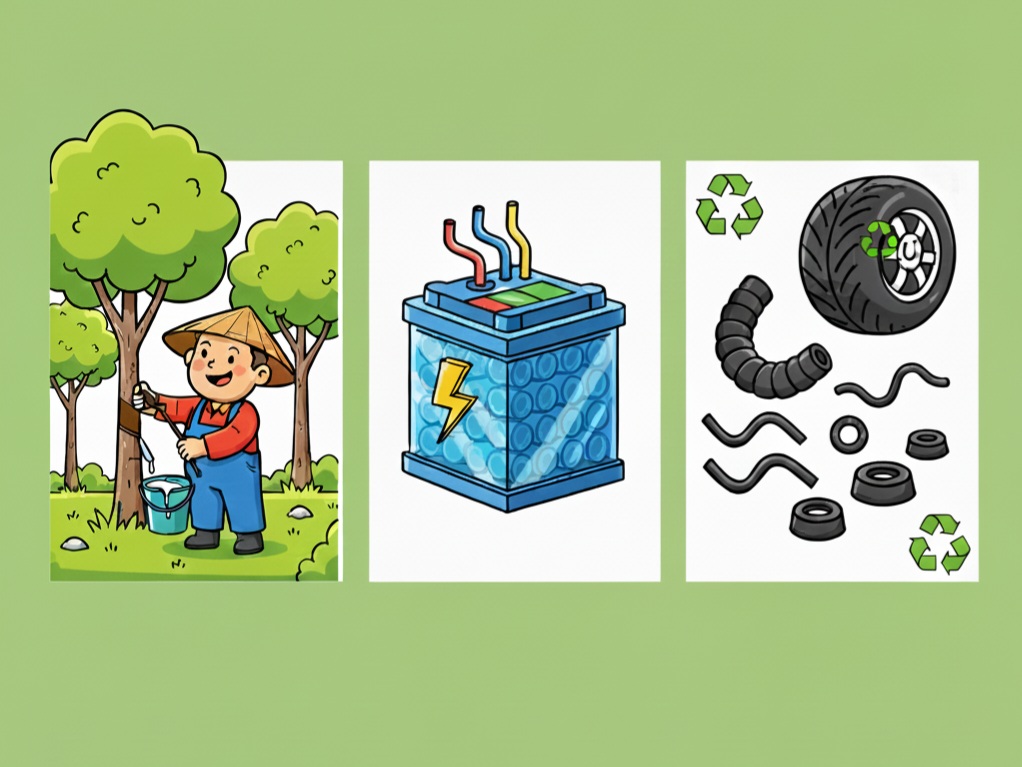
A future in which millions of our small-scale farmers and artisans no longer sell the same raw commodity they have sold for decades, but instead master downstream products worth tens or even hundreds of times more — products we currently import at great expense, products that have made our neighboring countries rich, products that could one day force the world’s industrial giants to come knocking at our door.
There exists one everyday commodity, something we see and touch almost daily, produced in gigantic volumes by our own soil. If policy dares to push thousands of UMKM up to the very highest steps of its value chain, then within one or two decades the world will no longer ask “When will Indonesia become a developed nation?”
Instead, the world will ask in astonishment: “How did Indonesia become so suddenly irreplaceable in that sector?”
That is the direction our UMKM must actually be taken.
Not toward ever-prettier packaging for chips and T-shirts,
but toward the very peak of the global value chain of something we have always taken for granted.
The question is no longer “Is it possible?”
but “When will we finally dare to take that step?”