
Latest Articles
- Managing a Company Through the Philosophy of the Human Body: Synergy and Organic Functions in the Custom Rubber Workshop Industry

- Product Certification or Quality Evidence with Client and Third-Party Witness Testing: Which Takes Precedence for a Custom Rubber Spare Part Workshop?

- National Rubber Resilience and Material Innovation: The Heart of Modern Custom Rubber Component Reliability

- Happy Independence Day, Republic of Indonesia!
- Quality Gap Control: Precision Strategies and Risk Management in Customized Rubber Spare Part Manufacturing
The Impact of the Tariff War on Indonesia’s Rubber Industry: Challenges and Opportunities
Indonesia, the world’s second-largest producer and exporter of natural rubber, has long relied on its rubber industry as a cornerstone of its economy. With approximately 90% of its rubber output produced by smallholder farmers and an export market valued at billions of dollars, the sector is a critical source of foreign exchange and employment. However, the recent escalation of global trade tensions, particularly the tariff war initiated by U.S. President Donald Trump in 2025, has introduced significant challenges for Indonesia’s rubber industry.
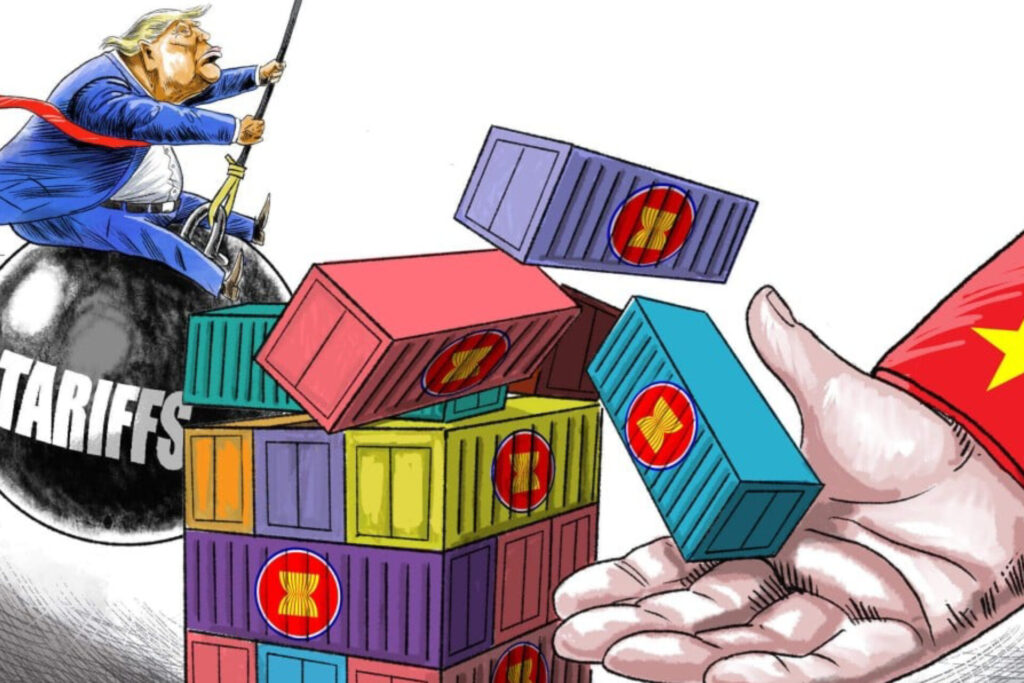
A 32% tariff on Indonesian goods entering the U.S., coupled with ripple effects from U.S.-China trade disputes, threatens the sector’s competitiveness. Yet, amidst these challenges, strategic opportunities exist for Indonesia to adapt, diversify, and strengthen its position in the global rubber market. This article explores the multifaceted impact of the tariff war on Indonesia’s rubber industry, highlighting both the hurdles and potential pathways forward.
Challenges Posed by the Tariff War
- Reduced Competitiveness in the U.S. Market
The U.S. is a key destination for Indonesian rubber exports, with tires and rubber products forming a significant portion of the $23.28 billion in goods exported to the U.S. in 2023. The imposition of a 32% tariff on Indonesian products has increased the cost of these goods, making them less competitive compared to alternatives from countries facing lower tariffs, such as Brazil (10%) or un-tariffed rivals. This price disadvantage squeezes profit margins for Indonesian exporters, who must either absorb the tariff costs or pass them on to buyers, risking reduced demand. The Bank of Indonesia has noted similar pressures in other sectors, with economists warning that the tariff could erode the viability of rubber exports to the U.S.. - Spillover Effects from U.S.-China Trade Tensions
The U.S.-China trade war, with tariffs of 34% on Chinese goods, has indirect but profound effects on Indonesia’s rubber industry. Chinese rubber and tire manufacturers, facing exclusion from the U.S. market, are flooding global markets with surplus products at lower prices. This oversupply depresses global rubber prices, forcing Indonesian producers to cut prices to remain competitive. The resulting pressure on profit margins is particularly acute for smallholder farmers, who account for 85% of Indonesia’s rubber production and lack the financial resilience to weather prolonged price slumps. - Low Productivity and Structural Vulnerabilities
Indonesia’s rubber industry faces internal challenges that exacerbate the impact of external tariffs. Compared to competitors like Thailand (1,800 kg/ha/year), Indonesia’s rubber productivity is significantly lower at 1,080 kg/ha/year, due to aging rubber trees, limited investment by smallholder farmers, and outdated cultivation techniques. These structural weaknesses make it harder for the industry to absorb the financial strain of tariffs and compete in a price-sensitive global market. Additionally, the industry’s heavy reliance on exports (85% of production) exposes it to global trade disruptions, with little domestic market cushion. - Currency and Economic Pressures
The tariff war has contributed to a broader economic slowdown in Indonesia, with the rupiah falling to levels not seen since the 2008 financial crisis. A weaker rupiah increases the cost of imported inputs like fertilizers and equipment, further straining smallholder farmers. Moreover, the tariff-induced decline in export revenues could exacerbate Indonesia’s trade surplus with the U.S., valued at $16.84 billion in 2024, potentially inviting further protectionist measures. - Non-Tariff Barriers and Global Standards
Beyond U.S. tariffs, Indonesian rubber exporters face non-tariff measures (NTMs) in major markets like China, Japan, and the EU. For instance, China’s 2015 policy reducing the crude rubber content in compound rubber imports to 88% imposed a 20% import duty, aligning it with natural rubber tariffs. Such measures, combined with sanitary and phytosanitary (SPS) standards and technical barriers to trade (TBT), increase compliance costs and limit market access, compounding the challenges posed by U.S. tariffs.
Opportunities Amidst the Crisis
Despite these challenges, the tariff war presents opportunities for Indonesia’s rubber industry to adapt and thrive. By leveraging its strategic position, pursuing diversification, and implementing domestic reforms, Indonesia can mitigate the impact of tariffs and position itself for long-term resilience.
- Diversifying Export Markets
The tariff war underscores the risks of over-reliance on the U.S. market. Indonesia can pivot to alternative markets, particularly in Asia, where demand for rubber remains strong. China, the world’s largest rubber consumer, offers a vast market, especially as U.S. tariffs redirect Chinese demand toward Southeast Asian suppliers. Deepening trade ties through frameworks like the Regional Comprehensive Economic Partnership (RCEP) and the Belt and Road Initiative (BRI) could enhance access to Chinese and ASEAN markets. Additionally, emerging markets like India and South Korea, already major destinations for Indonesian rubber, present growth opportunities. - Attracting Foreign Direct Investment (FDI)
The U.S.-China trade war has prompted multinational companies to diversify supply chains away from China to avoid tariffs. Indonesia’s competitive labor costs, large domestic market, and strategic location within ASEAN make it an attractive destination for rubber processing and tire manufacturing investments. For example, Singapore-based Halcyon Agri Corporation’s $360 million investment in nine Indonesian rubber processing plants signals growing foreign interest. By streamlining regulations and improving infrastructure, Indonesia can capture more FDI, boosting production capacity and technology transfer. - Enhancing Productivity and Value-Added Production
Addressing low productivity is critical to improving the industry’s resilience. Government support for replanting programs to replace aging rubber trees, as urged by the Indonesian Rubber Farmers Association, could double yields in regions like West Java from 750 kg/ha to 1.5 tons/ha. Additionally, investing in training for smallholder farmers and promoting modern cultivation techniques can close the productivity gap with competitors. Shifting focus from raw rubber exports to value-added products, such as high-grade tires or industrial rubber goods, could also increase profitability and reduce exposure to volatile commodity prices. - Leveraging Regional Integration
The ASEAN Economic Community (AEC), which aims to create a single market and production base, offers a platform to strengthen Indonesia’s rubber industry. As Thailand, Indonesia, and Malaysia collectively produce 66% of the world’s rubber, regional cooperation could foster an integrated rubber production hub, reducing costs and enhancing competitiveness. Indonesia can also negotiate preferential trade agreements, such as the Indonesia-EU Comprehensive Economic Partnership Agreement (CEPA), to secure better market access and counterbalance U.S. tariffs. - Capitalizing on Trade Negotiation Windows
The 90-day delay in tariff enforcement announced by President Trump provides a critical window for diplomatic engagement. Indonesia’s neutral geopolitical stance and history of benefiting from trade diversion during the 2018 U.S.-China trade war position it well to negotiate favorable terms with the U.S. By addressing U.S. concerns about non-tariff barriers, such as local content requirements, Indonesia could secure tariff relief or exemptions for rubber products. Simultaneously, pursuing multilateral coordination with other Indo-Pacific nations facing U.S. tariffs could strengthen Indonesia’s bargaining power.
Strategic Recommendations
To navigate the tariff war and capitalize on emerging opportunities, Indonesia’s government, industry stakeholders, and smallholder farmers must act decisively:
- Policy Reforms: Implement targeted fiscal incentives, such as subsidies for replanting and tax breaks for value-added rubber processing, to support the industry. Streamline regulations to attract FDI and reduce bureaucratic hurdles for exporters.
- Market Diversification: Fast-track trade agreements with the EU, OECD, and ASEAN partners to diversify export destinations. Strengthen marketing efforts in high-growth markets like China and India.
- Investment in Productivity: Launch national programs to rejuvenate rubber plantations, provide low-cost loans to smallholder farmers, and promote sustainable farming practices to boost yields.
- Regional Collaboration: Leverage the AEC to create a regional rubber production hub, sharing technology and resources with Thailand and Malaysia to enhance competitiveness.
- Diplomatic Engagement: Use the 90-day tariff delay to negotiate with the U.S., emphasizing Indonesia’s role as a reliable trade partner and addressing non-tariff barrier concerns.
Conclusion
The tariff war, particularly the 32% U.S. tariff on Indonesian goods, poses significant challenges for Indonesia’s rubber industry, from reduced competitiveness and depressed global prices to internal productivity constraints. However, these challenges are not insurmountable. By diversifying export markets, attracting FDI, enhancing productivity, and leveraging regional and diplomatic opportunities, Indonesia can transform adversity into a catalyst for growth. The rubber industry, a vital pillar of Indonesia’s economy, stands at a crossroads. With strategic reforms and proactive measures, Indonesia can not only weather the tariff storm but also emerge as a more resilient and competitive player in the global rubber market.
References
Slowing Indonesian economy battered by flow-on from Trump tariffs – World Socialist Web Site
Tariffs & Trade Conflicts: The Global Implications of U.S. Tariffs – fiscalnote.com
US tariffs: Challenges and opportunities for China-Indonesia trade and investment – thinkchina.sg
Rubber Industry Indonesia: Challenges and Opportunities – indonesia-investments.com
Tag: Rubber Industry – indonesia-investments.com
Indo-Pacific Economies Develop Strategies To Offset US Tariff Impacts – bowergroupasia.com
Analysis Rubber Industry Indonesia: Production, Export & Plantations – indonesia-investments.com
Trade margins of rubber exporters: The case of Indonesia – pmc.ncbi.nlm.nih.gov
US tariffs present challenges, opportunities for Indonesia – windonesia.com